When waterproofing systems fail, the damage accelerates fast. Our Naples experts diagnose the failure and implement the right solution to protect your home from costly water damage.
Schedule Your Waterproofing Assessment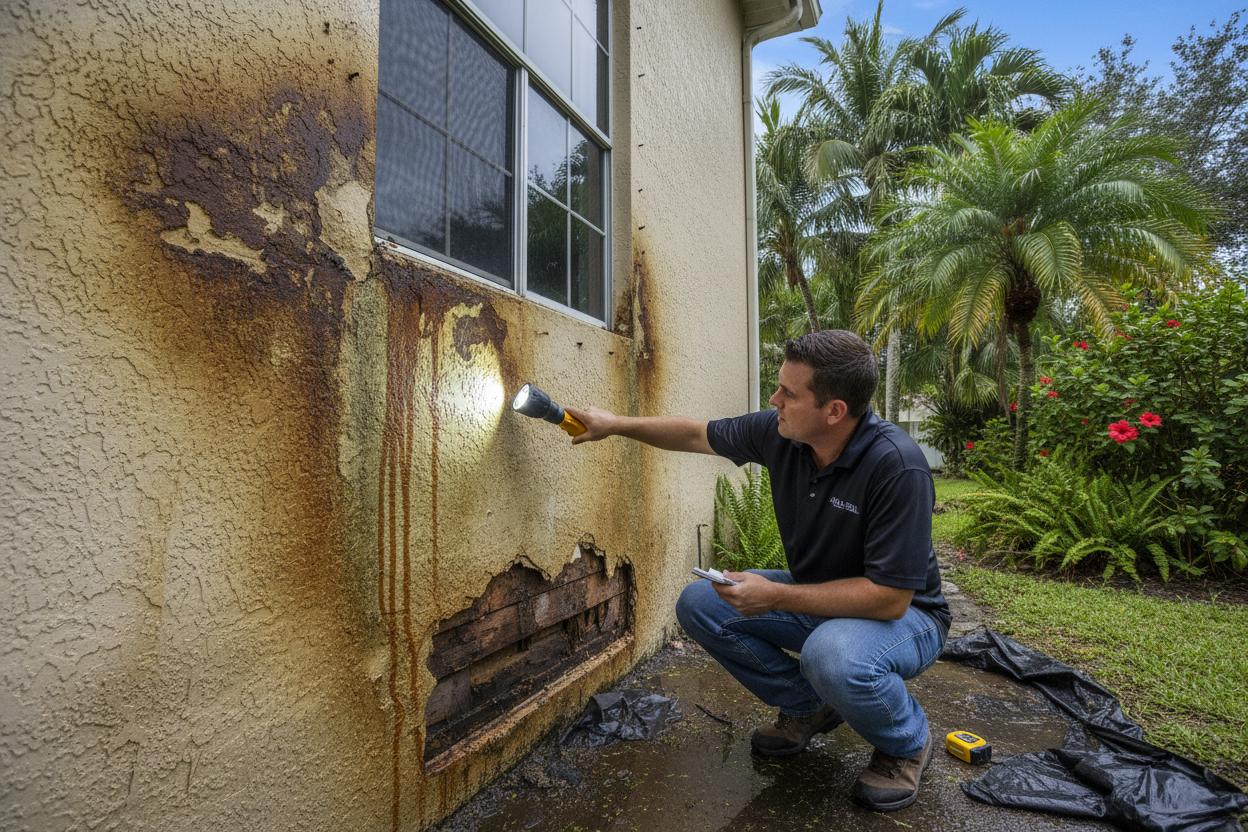
Recognize the warning signs early to prevent extensive and expensive damage.
Visible water entering through walls, ceilings, or foundations is the most obvious sign of waterproofing failure. Even small leaks indicate a compromised system.
Persistent mold growth on interior or exterior surfaces indicates ongoing moisture penetration. Mold poses health risks and signals a failed moisture barrier.
White, powdery deposits on concrete, stucco, or brick surfaces are mineral deposits left behind when water evaporates—clear evidence of water moving through the material.
Paint that bubbles, blisters, or peels off walls indicates moisture pushing through from behind. This is a common sign of waterproofing system failure.
Persistent damp, musty smells inside your home indicate hidden moisture accumulation within walls or building cavities where waterproofing has failed.
Wood rot, corroded metal, deteriorating concrete, or compromised insulation all result from prolonged water exposure due to failed waterproofing protection.
Moisture-saturated insulation loses its effectiveness, forcing your HVAC system to work harder. Unexpectedly high energy bills can indicate water infiltration.
Understanding the cause helps us implement the right repair solution.
All waterproofing materials have a finite lifespan. UV exposure, thermal cycling, and moisture gradually degrade membranes, sealants, and coatings until they no longer provide protection.
Improper surface preparation, insufficient material thickness, missed seams, and incorrect application techniques are leading causes of premature waterproofing failure.
Using interior-grade products outdoors, incompatible material combinations, or systems not rated for Florida's climate leads to rapid deterioration and failure.
Structural settling, thermal expansion, and wind-induced flexing cause cracks and separations in rigid waterproofing systems, creating pathways for water entry.
Florida's intense sun degrades exposed waterproofing membranes and coatings over time, causing them to become brittle, crack, and lose their water-resistant properties.
Hurricanes, tropical storms, and prolonged heavy rainfall can overwhelm or physically damage waterproofing systems—especially if they were already compromised.
We systematically diagnose and repair failed waterproofing systems for lasting protection.
Comprehensive inspection using moisture meters, thermal imaging, and visual assessment to locate all failure points and affected areas.
Determine why the system failed—whether age, installation error, material defect, or structural issues—so the same problem doesn't recur.
Carefully remove failed waterproofing materials, damaged substrates, and compromised building components to prepare for proper repair.
Install new, high-quality waterproofing systems using materials specifically selected for Florida's climate and your building's specific needs.
Verify the repair with water testing and moisture verification to ensure the system performs correctly before we consider the job complete.
Proactive measures protect your investment and prevent recurring problems.
Comprehensive moisture protection solutions for your property.
Explore our full range of professional waterproofing services including new system installations and preventative treatments.
Get a complete evaluation with our building envelope assessment to identify all potential water entry points.
Stop active water penetration with expert wall water intrusion repair services.
Signs of waterproofing failure include water intrusion or damp spots on walls and ceilings, mold and mildew growth, efflorescence (white powdery deposits), peeling paint or wallpaper, musty odors, visible cracks in exterior waterproofing layers, and unexpectedly high energy bills due to moisture compromising insulation.
Whether a failed waterproofing system can be repaired or needs replacement depends on the extent and type of failure. Localized failures like cracked membranes or failed sealants can often be spot-repaired. However, widespread deterioration, improperly installed systems, or aged materials typically require partial or complete replacement for reliable protection.
A properly installed waterproofing system in Florida should last 10-20 years depending on the materials used, exposure conditions, and maintenance. Fluid-applied membranes typically last 10-15 years, while high-quality sheet membranes can exceed 20 years. Regular inspections and maintenance significantly extend system lifespan.
Call us today or fill out our contact form to schedule your free waterproofing failure inspection and repair estimate in Naples, FL.
Request Free Assessment